
Smart City Interactive Table
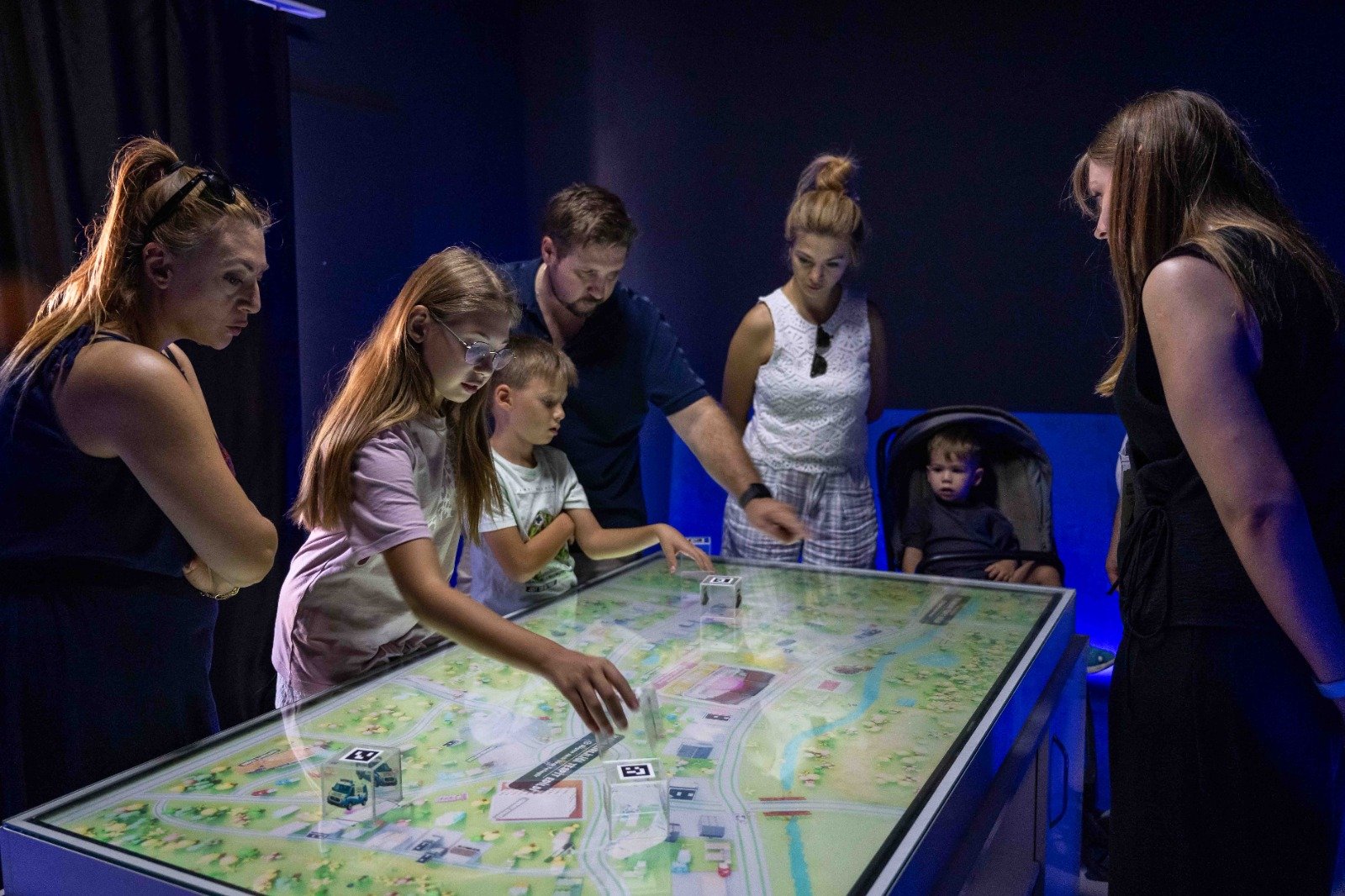
Urban management isn't just about data; it's where human experience, design and technology intersect. A phygital experience that brings game design, computer vision and urban simulation together on a single table.
Learning without being taught.
At the heart of the project is the principle of serious gaming. Complex municipal processes and smart-city infrastructures are conveyed not through instructional text, but through a game structure that puts the user directly at the centre of decisions and actions.
Visitors take the city's pulse, manage data, and respond to crises with physical moves, experiencing first-hand what the future of municipal governance looks like.
Three core mechanics.
Phygital touch
The feeling of moving physical objects on the table, instead of tapping a screen, deepens the player's sense of ownership and involvement.
Dynamic crisis loop
Crises unfolding in real time make themselves felt on the map through smoke, water particles and neon alarm rings.
Feedback and reward
When the right pawn is placed on the right crisis zone, a "Problem Solved" moment plays out; the municipality's real performance data is then shown to the player.
Five crises, five transparent pawns.
The Born-Eye AI tool, drones and camera networks report a crisis; the player responds with the matching pawn.
GAME ENGINE · VFX
The city's living texture, dynamic weather conditions and Niagara particle effects, built on Unreal Engine 5.
AI · TRACKING
Image processing that reads the overhead camera in milliseconds and relays the position of ArUco-coded pawns with no lag.
INDUSTRIAL DESIGN
The ergonomics of transparent acrylic pawns and transparent labels that don't obscure the map.
URBAN PLANNING
Integrating Bornova's real field data into the game's scenario fabric.

Smart cities can't be run by software alone; they need collective intelligence, well-designed user experiences and a participatory governance philosophy.